The right apron is not a style you like the look of; it is a match between what a job does to a garment and three variables you get to specify: the cut, the fabric weight, and the pocket layout. A barista pulling shots all day, a server working a dining-room floor, and a woodworker at a bench are abusing an apron in completely different ways. Ordering the same blank for all three is how you end up with soaked cotton behind the espresso machine and tool pockets that tear off at the rivet. This guide runs the decision the way it actually plays out — by the setting the aprons will live in.
Coffee shops and cafes
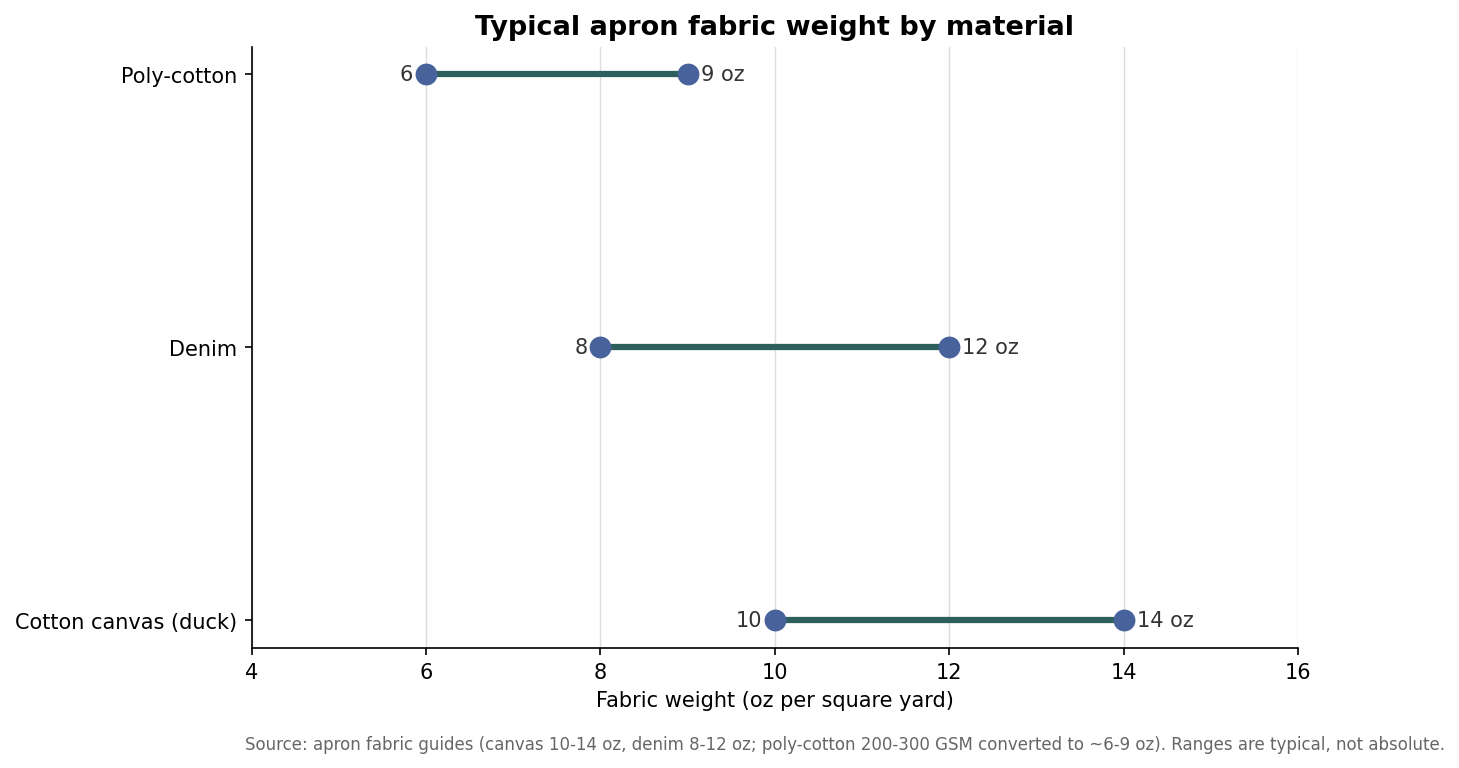
Reach for a mid-weight denim or canvas bib, or a cross-back if the shift runs long. Denim in the 8 to 12 oz range photographs well and suits the craft-cafe look, but raw indigo will transfer dye onto skin and clothing for the first several washes, so specify pre-washed (sanforized) denim if the aprons go straight into service. A chest pocket holds a phone or order pad; a divided lower pocket takes a thermometer, tamper, or pen. Baristas wear their aprons open-to-close, which is exactly where a cross-back strap earns its keep: it moves the load off the neck and onto the shoulders across an eight-hour day instead of hanging everything from one strap behind the head. If the cafe also runs a retail counter or a pastry case, a slightly longer bib protects against flour and syrup down the front, while a shop-style apron with more utility pockets suits a roaster or a bar that doubles as a workspace. The colorway matters more here than in most settings, because the apron is a visible part of the brand every time a customer steps up to order, so it is worth matching thread and strap color to the shop’s palette rather than defaulting to black.
Restaurant front of house
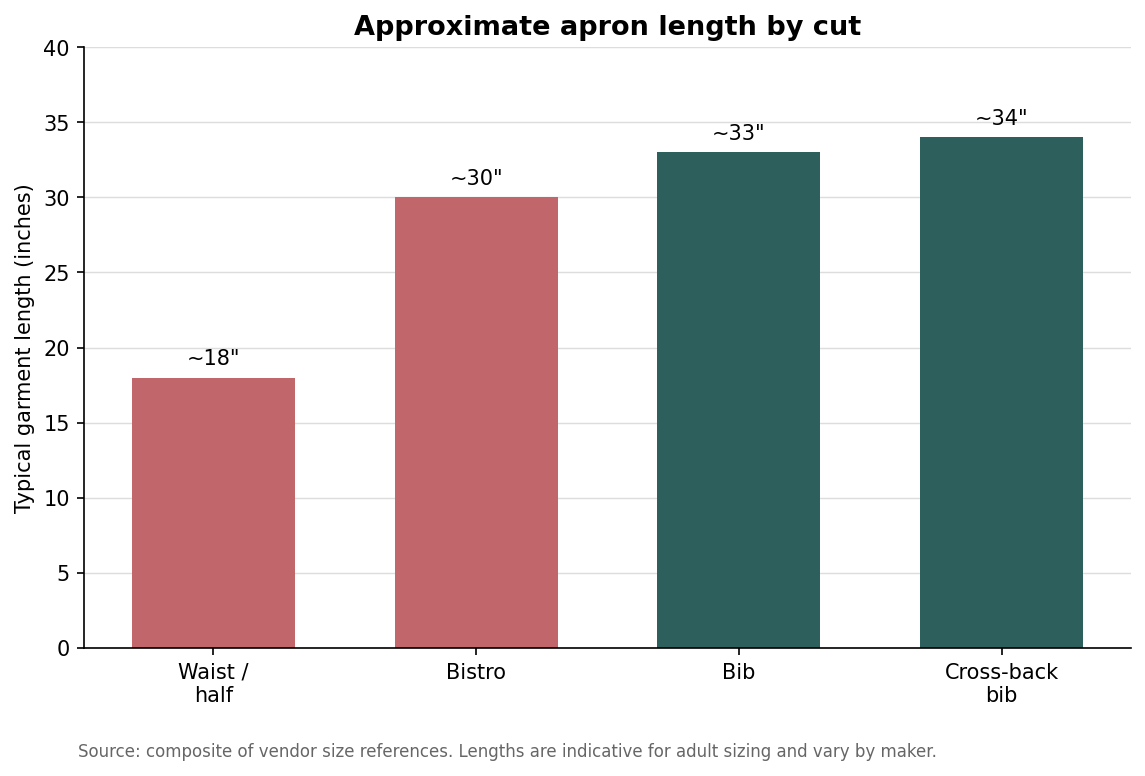
Front-of-house work is about mobility and turnover, so the cut shrinks and the fabric changes. Waist and bistro aprons free the arms and legs for a floor shift, with a bistro length dropping to below the knee for a more polished fine-dining line. The fabric that matters most here is poly-cotton, roughly 200 to 300 GSM, because a restaurant launders uniforms constantly: the blend resists wrinkles, shrinks less, and dries faster than pure cotton, which keeps a large apron rotation looking uniform. Multiple front pockets — one wide pocket split into two or three wells — hold guest checks, several pens, a wine key, and a bank of cash without any of it migrating into one lump. The choice between a waist apron and a bistro comes down to the room: a fast casual floor rewards the shorter, lighter waist cut for speed, while a white-tablecloth service leans bistro for the longer, dressier line it creates. Whichever you pick, order a consistent tie length so the aprons look uniform when a row of staff stands at the pass, and remember that dark colors hide stains between wash cycles far better than light ones on a busy service.
Kitchens, BBQ, and anything near heat
Go heavy and go full-length. A line cook or a pitmaster wants a bib in 12 to 14 oz cotton canvas: the extra weight resists abrasion, shrugs off grease and splatter, and holds up to being wiped down a hundred times a service. Full chest-to-knee coverage is the point, and a cross-back harness again beats a neck loop when the apron is on for a full shift. There is also a real safety reason to favor cotton canvas over synthetics around open flame and grills — natural fibers char and resist ignition rather than melting onto skin the way many synthetics do. If the setting involves a smoker or a grill line, that fiber choice is not just about durability.
Salons, barbers, and makers’ benches
Once you leave foodservice the hazards change and so does the spec. Stylists and barbers deal with water, color, and clippings, so a shorter waist apron or a compact bib in a tighter-weave or coated fabric sheds moisture and wipes clean, with slim pockets sized for shears, combs, and clips rather than deep utility wells. Woodworkers, leatherworkers, and metal benches push the other direction: heavy waxed canvas or duck, often with a split leg for freedom at a bench or lathe, riveted or bar-tacked tool pockets, and a cross-back harness carrying the weight of loaded pockets. Florists and market makers land in the middle, favoring a canvas bib or pinafore with a couple of pockets for snips, twine, and a phone. The through-line is simple: the more the pockets carry, the more the strap system and the stitching at the pocket corners matter.
Specifying it for a team
With the cut and fabric settled, the order details are quick. Embroidery is the durable choice on canvas and denim and survives repeated washing; screen printing suits large or full-color art on flatter, lighter panels; and woven or leather patches give a rugged look on heavy workwear. Heavier fabric needs an appropriate stabilizer behind embroidery so the stitches sit flat, and denim should be washed before it is decorated so later shrinkage does not distort the logo. Put the mark where the wearer’s motion will not constantly fold it — high on the bib chest or on a waistband panel rather than low center where a tie crosses. Order across a size range rather than a single size, confirm the minimum order quantity with your decorator, and ask for a proof or pre-production sample so thread and print colors are checked against the actual apron color before the full run. Match the apron to the job first, and the branding decisions that follow are almost all easy ones.