Every other decision about a custom apron rides on the fabric. Style, pocket layout, and logo placement all matter, but the cloth is what decides whether an apron shrugs off a season of grease and hot line work or thins out and frays in a few months. The choices come down to a handful of materials and, within each, a weight. Here is what separates them and how to match the cloth to the work.
Weight is the first number that matters
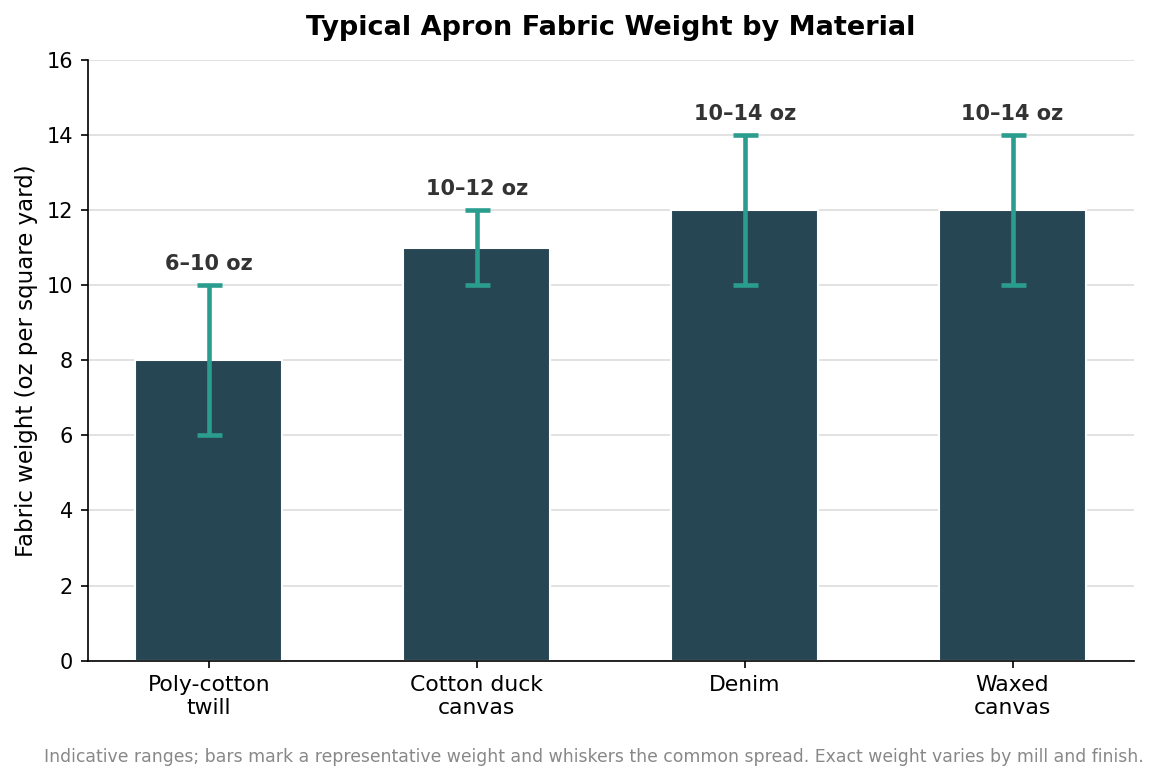
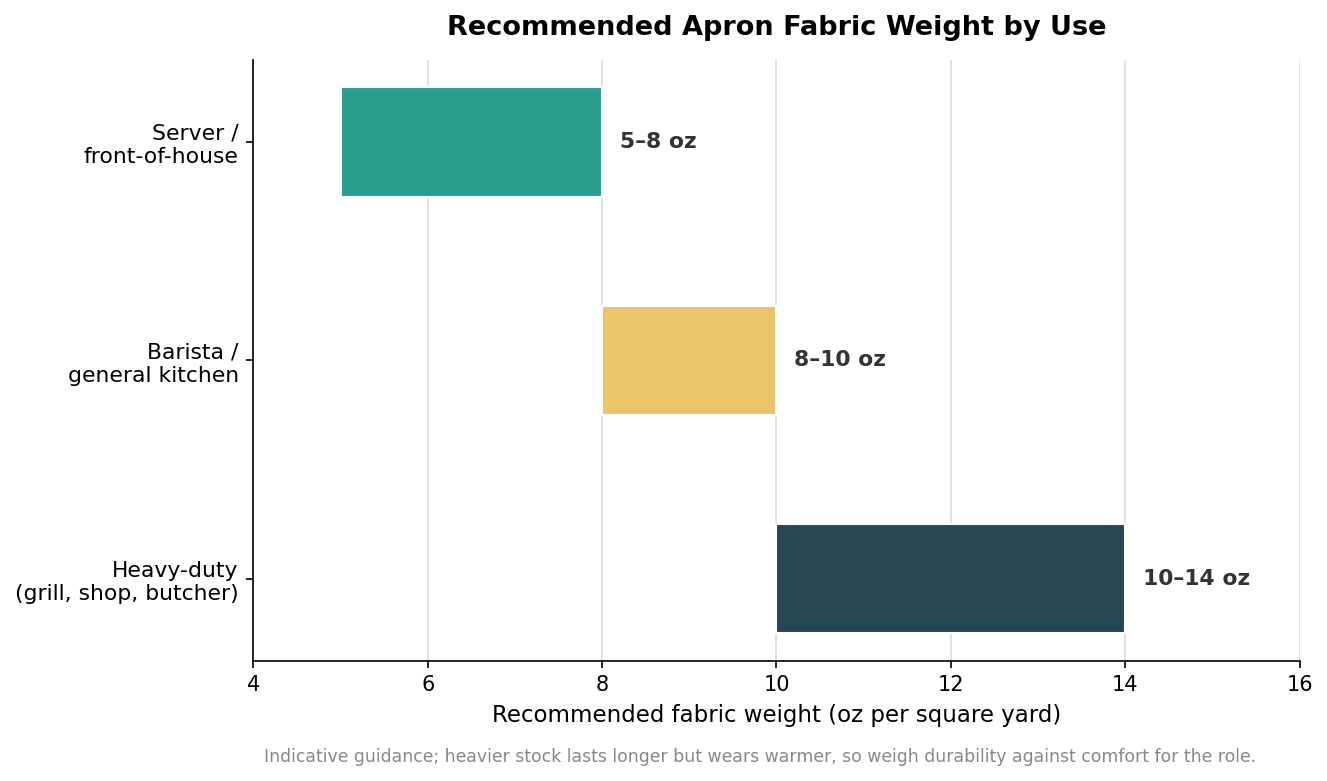
Apron fabric is sold by weight, measured in ounces per square yard, and that single number tells you most of what you need to know before you even name the material. A lighter cloth in the 5-to-8-ounce range is cooler, drapes softly, and dries fast, which is why it suits servers and counter staff. A heavier cloth from 10 ounces up stands up to abrasion, splashes, and daily laundering, at the cost of more warmth and a stiffer hand until it breaks in. Heavier is not simply better. A 14-ounce apron on a pastry prep station is overkill that wears the person down over a shift, while an 8-ounce apron at the grill wears out fast. Read weight first, then choose the fiber.
Cotton duck canvas: the workhorse
Cotton duck canvas is the material most people picture when they think of a serious work apron, and it earns the reputation. In the 10-to-12-ounce range common for aprons, it resists punctures and abrasion better than anything short of leather, and a 12-ounce canvas apron in daily commercial use is commonly cited as lasting on the order of 18 to 24 months, noticeably longer than a lighter blend. Treated with a fluorocarbon or similar liquid-repellent finish, it sheds water and grease well; left untreated, it absorbs and stains, so specify the finish if the apron will see spills. Canvas also softens and molds to the wearer over time, which regulars tend to like. The trade-offs are real: it runs warmer, feels stiff at first, and typically costs meaningfully more up front than a blend. One naming quirk to know is that “numbered” duck runs backwards from ounce weight, where a lower number is a heavier cloth, so when in doubt confirm the actual ounces rather than the duck number.
Poly-cotton twill: lighter and faster-drying
A poly-cotton twill, usually a 65 percent polyester and 35 percent cotton blend, is the practical choice where comfort and turnaround beat maximum toughness. The polyester makes it lighter, more breathable, and quicker to dry, and it resists wrinkles and holds color through frequent commercial washing, so a busy front-of-house crew can launder and re-wear the same aprons on a tight cycle. The polyester content also keeps shrinkage low. It is genuinely durable, though a lighter blend wears faster than heavy canvas in a hot, greasy environment and tends to absorb grease rather than shed it, which means more frequent washing. For servers, baristas, hosts, and pastry or prep roles, that is usually an acceptable trade for the lighter feel and lower cost.
Denim, waxed canvas, and leather: the specialty picks
Three more materials cover the cases the first two do not. Denim is a heavy cotton twill with a rugged, on-trend look that photographs well for branded bar and counter settings; it is durable and ages attractively, but it is warm and slow to dry. Waxed canvas is cotton canvas impregnated with a wax finish that makes it highly water- and stain-resistant and gives it a distinctive patina that deepens with use; the catch is care, since waxed cloth should be wiped or spot-cleaned and re-waxed rather than machine-washed, which rules it out for high-volume laundry rotations. Leather sits at the top for heat, spark, and abrasion resistance and is the standard for blacksmithing, welding, woodworking, and serious barbecue; it is heavy, expensive, wipes clean rather than washes, and is more a lifetime tool than a uniform piece. Each of these is a deliberate choice for a specific job or a specific brand image, not an everyday default.
Fabric also steers how you can brand the apron. A firm, heavy canvas or denim front is an excellent base for dense embroidery and for stitched-on woven or leather patches, which sit flat and hold up to washing on a stable, tightly woven ground. Lighter poly-cotton twill takes embroidery too, but its polyester content makes it a natural fit for heat transfer and dye-based prints that reproduce photographic logos and gradients thread cannot. Waxed canvas and leather are better suited to debossing, riveted patches, or heat stamping than to standard embroidery. It is worth settling the decoration method in the same conversation as the fabric, rather than choosing cloth first and discovering later that the logo you want does not sit well on it.
Matching fabric and weight to the job
The clean way to spec an apron is to start from the role, land on a weight band, then pick the fiber that fits the environment and the look. Front-of-house and light prep sit comfortably in the 5-to-8-ounce range, general kitchen and barista work in the 8-to-10-ounce band, and heavy-duty grill, shop, and butcher stations in 10-to-14-ounce territory. Many operations that run several roles simply mix fabrics by station rather than forcing one apron on everyone: canvas for the line, poly-cotton for servers, denim where branding matters.
Two details make any of these choices last. First, construction: the aprons that fail almost always fail at the strap attachment points, so specify bar-tack reinforcement there regardless of fabric, because the strongest cloth still tears out at a weak seam. Second, laundering: confirm the fabric and any finish can take your wash cycle, since a fluorocarbon repellency wears down over many hot washes and waxed or leather goods cannot go through a commercial machine at all. Pick the weight for the work, the fiber for the environment, and the construction for the stress points, and a custom apron order holds up as long as the job asks it to.